The release of Oxygen XML Web Author 28 focuses on delivering AI-assisted authoring, DITA-centric workflows, and enhanced enterprise integration capabilities within the web-based solution for editing and reviewing XML content in any modern web browser. It adds deeper integration with Oxygen AI Positron 8.0, streamlines editing and review tasks, and strengthens security for large organizations.
There are changes in:
Oxygen AI Positron for Web Author
Expanded AI Service Integration
The latest Oxygen AI Positron for Oxygen XML Web Author supports the latest generation of AI models and introduces broader integration options with a variety of AI platforms, making it easier to connect your preferred AI services.
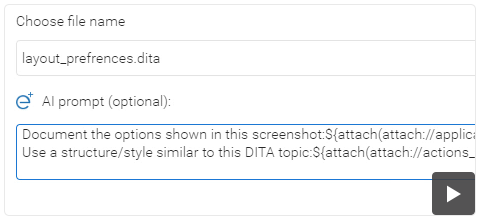
AI-Powered New File Creation
When creating a new file, you can now provide instructions in an AI prompt field to generate a document with pre-populated content. You can also use drag/drop or copy/paste to attach text files (XML, Markdown), images, or documents (PDF, Word, PowerPoint), to guide the AI in generating content for your new file.
Uncluttered Chat Input Area
Attachments that you add to your conversation to provide additional context are now presented above the chat input area, ensuring that they do not clutter your instructions. You can still reference specific attachments inline within your instructions by using the @ symbol followed by the file name.

Attach Files to the Conversation Using Drag/Drop or Copy/Paste
You can now attach files to your AI conversation by dragging them or by copying and pasting them into the chat input area. You can also drag and drop topic references from the DITA Maps view. This makes it faster to share relevant documents and provide context for your AI interactions.

Attach Word, PowerPoint, and PDF Files
You can now attach Word (docx), PowerPoint (pptx), and PDF documents in the Chat view, allowing you to provide more context to the AI. This enhances the accuracy and relevance of AI responses by utilizing text and images (images are supported for Word and PDF) from these documents.
Dedicated Word (.docx) Attachment Handling
When you attach a Word (.docx) file, the text and images within the document are kept in their original order. This preserves the document’s structure and context, so you get more accurate responses.
Persistent Chat Across Editors
You can continue your chat with AI Positron as you change edited document and use the chat results in another document.
Compact AI Message Presentation
You now see AI messages in a more compact format, allowing you to view more content at once and reducing scrolling, so you can read conversations more efficiently.
Improved All AI Action Prompts
Prompts for all predefined AI actions have been optimized for greater accuracy and relevance. They are now developed using the DITA XML standard, enabling content reuse for more consistent prompts that follow similar patterns and structure.
AI-based DITA Conversion, Analysis, and Update Tools
Transform existing documents or DITA topics into various specialized DITA types (Task, Concept, Reference, Troubleshooting, Glossary). Also, the Analyze and update topic action can restructure topics by dynamically splitting the document into parts and applying the conversion to the appropriate topic types for each part.
Reference AI Actions in Chat Prompts
You now have the possibility of providing instructions to the AI to invoke the existing AI actions when performing complex tasks. For example, to correct the grammar and update the current document, you could type: Invoke correct grammar on the current document and save the updated content. This approach streamlines your workflow by letting you quickly apply changes or transformations in one place.

Quickly Find and Invoke AI Actions
Search for AI-powered actions using the search field inside the Actions drop-down menu, saving you time by quickly locating the actions you need.
Also, you can now quickly invoke the AI actions by using the / symbol in an empty chat, then start typing the name of the action. This displays a pop-up menu with a list of available actions that match the text you entered.
Multiple Chat Modes
You can now choose between three chat modes in the Chat view:
All modes automatically use your current context (project location, current document and type, and the DITA map in scope), so you don’t need to include this information in your prompts.

Automatic Fixes for Validation Issues in AI-Generated Documents
After AI writes a new document or when it replaces the currently edited document, you get automatic fixes for detected validation issues when possible, so your document stays valid without the need for manual fixes.

Save Prompt to Favorites After Invocation
After you send an AI prompt, you can add it to your favorites so you can reuse it at a later time. You can also edit the prompt before saving it.
Smart Scroll: Pause Auto-Scroll During AI Replies
You can now pause automatic scrolling to the end of an ongoing AI-generated reply by manually scrolling up in the chat window. When you scroll upward, the interface will temporarily stop following new messages, allowing you to read previous content at your own pace without losing focus. To resume automatic scrolling, simply scroll back down to the bottom of the chat, and the view will once again follow new replies as they appear.
Distribute or Filter AI Actions via Plugins and Frameworks
Plugins or frameworks may contain a folder named ai-positron-actions where AI actions are automatically loaded from. A file named excluded-action-ids.txt may also be placed in the same folder to define action IDs (on a line-by-line basis) that should be filtered out from the UI, useful for actions intended to be used in a different context, not directly invoked by the user.
Reference Prompt Files in AI Actions
Use the prompt_ref JSON property to reference text or Markdown files for prompts, allowing for more flexible AI action configurations.
Custom Actions Prioritized
Your custom actions are now displayed before the built-in actions wherever AI actions are shown, so you can access them more quickly.
Translated AI Actions
The categories, titles, and descriptions for the AI Positron default actions are now translated into the supported languages available for the user interface, making it easier to use these features in your language.
Inspect Chat Context
You can see the main context information that is sent to the AI for the current chat by hovering over the Context chip that is displayed above the chat input area. This adds clarity about the information the AI has available when processing a request. That information includes the editor selection (if applicable), edited document location, the DITA map location, and the project location (applicable only for Web Author integrations with Git).

Easier Access to Tool Call Details
You can now troubleshoot tool calls easier by viewing detailed information about each tool call directly in the Chat view. Simply hover over the tool name to see a summary, or click it to open a dialog box where you can review, copy tool call details, and import or export chats for sharing purposes.

Edit Document Tool
When using agentic chat to make changes to topics, small changes (e.g. attribute values, spelling corrections) can be made by the AI engine using the newly available edit_document tool that performs exact string replacements in a specified file.
General Editing/Reviewing
Easily Resize Table Columns
You can now resize table columns simply by dragging the column separator.

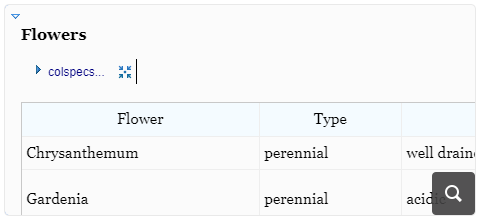
Toggle Full Width Mode on DITA Tables
Tables in DITA documents now have a Toggle Full Width button that appears above the table. This is especially helpful for large tables that are wider than the displayed screen, since it removes the scroll bar and displays the table in full width mode.
Add Comment from the Floating Toolbar
You can now add comments in a document directly from the floating toolbar that appears when you select content. This helps you give feedback faster, in the precise location needed, without breaking your writing flow.

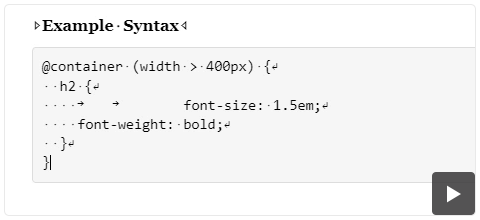
Display Whitespace Markers in the Editor
It is now possible to display whitespace markers in the editor. You can enable this feature by selecting the Show whitespace marks option that is available in the user preferences dialog box. This is especially helpful for managing various types of space characters in code blocks.
View Referenced Markdown Content in Expanded DITA Maps
Now, you can view content from referenced Markdown files when you expand all topics in a DITA map using the View Topic Content or Edit Topic Content actions. The Markdown content is automatically converted to DITA and displayed as it will appear in your published output, so you can review all your content together. In Edit Topic Content mode, the Markdown document is read-only.
Copy Visual Editor Content as Markdown
You can now use the Copy as Markdown option in the visual editor's contextual menu to copy selected content as Markdown. When you paste it into another application, formatting such as headings, styling, code blocks, tables, and lists is preserved in Markdown format.
Preview Video and Audio Controls in DITA 2.0 Documents
When editing DITA 2.0 documents, you see video and audio controls (<video>, <audio> elements) rendered directly in the visual editor, so you can easily review embedded media content.
Search for Pre-defined Templates When Creating a New File
You can now quickly find a pre-defined template when creating a new file by using the search filter at the top of the template selection dialog.
Search for Specific Attribute Values
You can now search for values that appear in attributes using the Find/Replace side view. After running a search, you can filter the results to show only matches found in attribute values, only in content, or both, helping you quickly locate and update the information you need.

Authentication
Dedicated Connector for Azure DevOps
Now, you can connect to your Azure DevOps Git repositories using a dedicated connector, which provides a Connect with Azure DevOps button for simpler authentication.

Customization and Integration
Check Grammar and Spelling Mistakes with the LanguageTool Plugin
You can now check grammar, in addition to spelling, when using the LanguageTool Support Plugin in Oxygen XML Web Author. When you hover over a highlighted issue, a tooltip describes the grammar problem.
When you hover over a spelling mistake, you now see a tooltip that shows the type of error and prompts you to right-click for available actions. If you have the Language Tool plugin enabled, the tooltip also includes a description of the detected grammar problems, helping you quickly understand and address issues in your text.
There are two plugin options: one for English, and another that supports languages such as Italian, Dutch, Spanish, Japanese, and Simplified Chinese.
Configure Behavior of Column Deletion Based on Change Tracking Status
You now have the ability to configure how deleting a table column behaves when change tracking is enabled. By setting the changeTrackingBehavior parameter, you choose whether column deletion is allowed, or blocked.
Control the Persistence of the Tags Display Mode
You can now configure how the user-selected Tags Display mode is applied in Web Author. Set the tags.display.mode.persistence option in the options.xml file to perEditor to reset the tags mode to the default for each new editor, or to perUser to apply your chosen tags mode to all open editors and make it the default for new ones.
For more information, see Oxygen XML Web Author Customization Guide: Control the Tags Display Mode.
Collapse Referenced Content to Improve Document Loading Performance
You can improve the performance of loading and editing DITA documents with multiple references by using the author.display.references.expanded option. When you set this option to false, referenced content is collapsed by default, and you can expand it only when needed. You can configure this option as an URL parameter/Loading Option or via the options.xml file.
Enable Authentication with OIDC
You can now enable application authentication to Web Author with OIDC, requiring users to authenticate to use Web Author, increasing security.
For more details, see Oxygen XML Web Author User Guide: Application Authentication with OIDC.
Component Updates
Apache Tomcat
Updated the Apache Tomcat server version to 9.0.111, offering the latest security updates and improved stability.
React
The Preact library was replaced by React 17.0.2.

© Copyright 2000-2026 COGITO SOFTWARE CO.,LTD. All rights reserved
